1. Introduction
1.1 Microalgae and their Commercial Applications
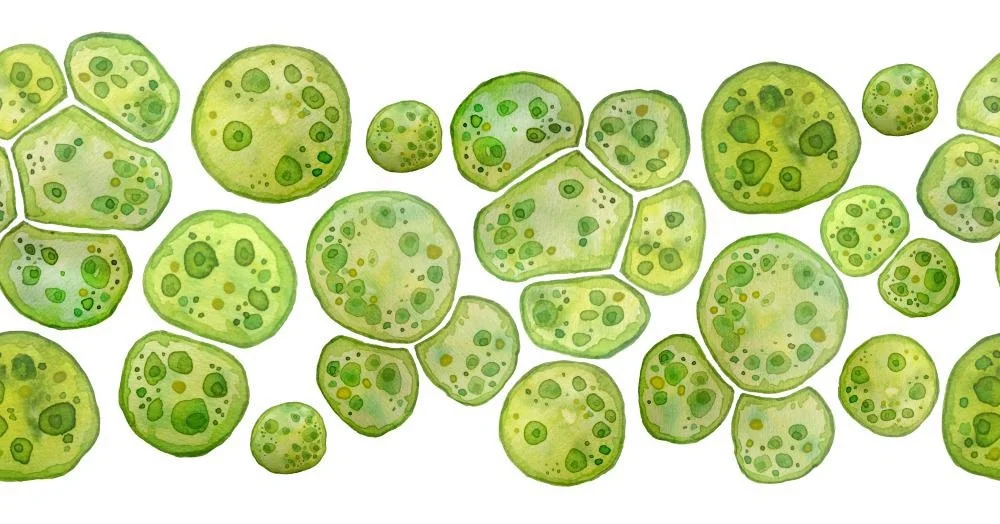
Algae can be categorized by their size into microalgae and macroalgae. Macroalgae are large and multicellular organisms seen with the naked eye. Microalgae are small, unicellular, and microscopic organisms that can be classified as either prokaryotic (Cyanobacteria) lacking a nucleus and compartmentalized organelles, or eukaryotic, resembling organisms such as green algae and diatoms (Khaligh & Asoodeh, 2022). Microalgae display a vast range in both morphology and molecular structure. They can vary in color (including green, red, and brown), shapes (circular, spiral, elongated), and size, ranging from 0.2 µm – 2 mm (Not et al., 2012).
Microalgae and cyanobacteria are representatives of freshwater and marine phytoplankton. They can grow in infertile or wastelands using wastewater or seawater (Han et al., 2008). Hence, their cultivation process does not compete with the resources required for traditional food production, making them a promising and sustainable alternative to large-scale crop farming. Indeed, microalgae have the potential to synthesize bioactive compounds (lipids, proteins, carbohydrates, vitamins, and pigments), which are particularly attractive for their antioxidant, antibacterial, antiviral, and immune-stimulating properties (Dolganyuk et al., 2020). They can also produce biofuels and are utilized for wastewater treatment. Overall, they are promising candidates for biomass production, in the medical sector, the chemical industry, cosmetics, wastewater treatment, and atmospheric CO2 mitigation (Bhattacharjee, 2016).
1.2 Cultivation Systems
In nature, microalgae grow in aquatic environments such as lakes, ponds, and oceans, where they directly use solar energy and CO2 from the atmosphere. In this process, growth is slow and uncontrolled. In order to exploit their full biotechnological potential, microalgae can be cultivated under controlled cultivation conditions to optimize and intensify growth and productivity. Their cultivation is carried out in open or closed systems, generally called raceways and photobioreactors, respectively.
1.2.1 Open Cultivation System
An open cultivation system can be extensive (lagoons or ponds), which are more natural with low maintenance costs, and crops are mixed with the wind, or intensive (raceway ponds) where paddle wheels are used to circulate the crop in a loop configuration (Figure 1). Open pond systems are widely used for biomass production due to low construction and operational costs; however, they suffer from several drawbacks. As an open system typically utilizes open shallow ponds, often in simple loops, all the components involved in the cultivation system are exposed to the external environment. Consequently, they are highly susceptible to contamination, and the continuous cultivation processes are difficult to maintain (Zhan et al., 2017). Besides, poor mixing provided by the paddlewheel and low gas mass transfer lead to inadequate carbon uptake by cells and insufficient removal of accumulated oxygen, which negatively impacts cell growth and are also among the limitations of this technology (Sompech et al., 2012).
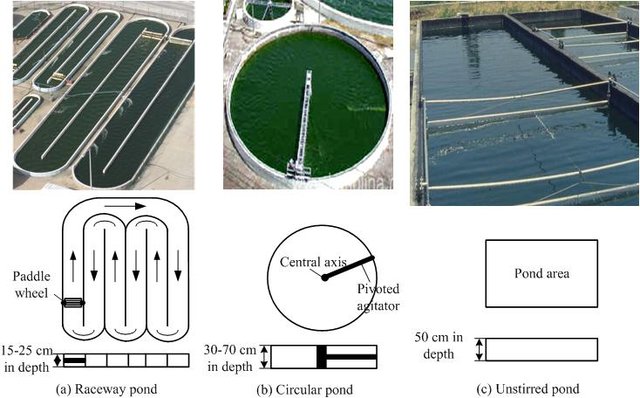
Figure 1.1: Three different designs of open‐pond systems (a and b: courtesy of A. Ben‐Amotz, National Institute of Oceanography, Israel; c: courtesy of M. R. Tredici, University of Florence, Italy).
1.2.2 Closed Cultivation System
Closed systems or photobioreactors are transparent bioreactors made of glass/ plastic that enclose the culture, minimizing contamination. It is easier to control the environmental conditions in these systems. Continuous operations are easily implemented, finally promoting high biomass productivity. Several types of photobioreactors exist with different geometries.
1.2.3 Photobioreactor Geometries
The geometry of the photobioreactors can be categorized into cylindrical geometries (tubular or cylindrical PBRs) and planar geometries (flat PBRs).
Tubular or Cylindrical Photobioreactors
Tubular PBRs can be categorized into several planes of tubes: vertical, helical, or horizontal (Figure 1.2 (a), (b), and (c), respectively). They are made of transparent tubes, with sizes ranging from 25-600 mm in diameter, inside which the culture circulates (Posten, 2009). These PBRs typically use gas sparger to remove oxygen and add CO2 to the growth medium. Since the sparged gas rises to the top of the cylinder and escapes from the tube, sparging air into horizontal and inclined tubes is challenging (Johnson et al., 2018).
Airlift photobioreactors (Figure 1.2 (e)) are classified as vertical tubular reactors and are typically cylindrical. These reactors utilize the principle of airlift, where gas (air) is introduced at the bottom, creating distinct vertical flows called riser (where the air is introduced) and downcomer (air is absent or removed), separated by physical barriers (Dasgupta et al., 2010). Airlift PBRs promote adequate mixing of the liquid without mechanical agitation; however, they have several disadvantages, including difficulties of scaling up, light penetration issues, high capital costs, and difficulties in controlling temperature at the top of the reactors (Johnson et al., 2018). Bubble column type PBRs (Figure 1.2 (h)) are vertical cylindrical reactors where natural light inflow is inclined, due to the lack of cylindrical symmetry and the optical diopter effect created by the illuminated surface. Other cylindrical vessels like stirred tank reactors (Figure 1.2 (g)) can damage cells due to the high shear stress generated in the impeller region.
Flat-Panel Bioreactors
Flat Panel or Flat Plate PBRs (figure 1.2 (d)) are transparent flat devices and can function as airlifts or bubble columns. They are usually made of transparent material, plastic, or glass. Flat-panel PBRs are generally less than 5-6 cm thick. As a result, they can maximize light inflow, resulting in high biomass productivity (Marsullo et al., 2015). A gas sparger is used at the bottom of the reactor to ensure efficient mixing and gas-liquid mass transfer. Flat-panel PBRs are widely used both at laboratory and industrial scales due to their high biomass productivity, ease of maintenance, light penetration, and the management of oxygen levels (Nuri et al., 2023). However, they can have problems like inadequate gas mixing and biofilm formation on the reactor surfaces.
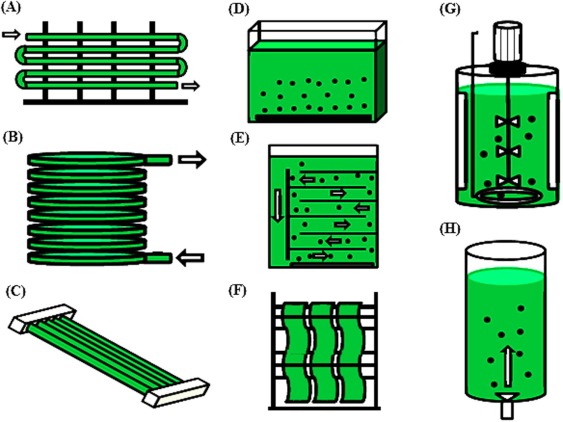
Figure 1.2: Schematic Representation of Different Types of Photobioreactors (a) vertical tubular, (b) helical tubular, (c) horizontal tubular, (d) flat panel, (e) airlift, (f) accordion type, (g) stirred tank, (h) bubble column (Ahmed et al., 2022).
1.2.4 Operational Parameters of PBRs
The photosynthetic efficiency and productivity depend on the design and operation of the cultivation system. In PBRs, several physicochemical parameters including light, nutrient supply (including inorganic carbon), temperature, pH, and salinity influence biomass production. In addition, the hydrodynamics of the cultivation system play an important role in optimizing biomass production in PBRs.
Light
Light is the most important parameter influencing the growth and productivity of microalgae; hence, its optimization is crucial for achieving the best output. Excess light, especially when coupled with high oxygen levels, affects the photosynthetic apparatus negatively. Microalgal growth is dependent on the photosynthesis rate, which in turn depends on light intensity. However, when light exceeds a certain level, light saturation and photoinhibition occur, decreasing the photosynthetic rate and consequently microalgal growth (Chowdury et al., 2020). Additionally, when the light intensity is insufficient, a photolimited regime occurs, limiting algal growth and photosynthesis rate. The radiation useful for photosynthesis, Photosynthetically Active Radiation (PAR), has wavelengths between 400 and 700 nm (Legrand et al., 2021). Besides light quantity (intensity and duration), microalgal growth is also influenced by light quality (wavelength). It should be mentioned that the geometry and orientation of the cultivation system must be designed to homogenize the light supply (Chowdury et al., 2020).
Effect of pH and Gas Transfer
Maintaining proper pH in photobioreactors is crucial as it ensures enzyme activity, nutrient availability, and CO2 utilization, affecting photosynthetic efficiency and overall system stability. In a photobioreactor, pH is often regulated by CO2 supply. These parameters are inversely related. For example, when the pH rises above the optimal value, it can be regulated by injecting CO2, which lowers the pH and shifts the bicarbonate equilibrium towards a higher concentration of CO2 (Takache, 2010). Gas transfer in PBRs depends on bubble size, gas flow, gas and growth medium composition, and reactor design. Maintaining bubble retention time is also essential for effective gas transfer. The CO2 in sparging gas should maintain a 0.2-0.5% CO2-to-Air ratio to ensure optimal growth (Johnson et al., 2018). During photosynthesis, an ideal gas transfer should match the CO2 consumption rate.
Temperature
Temperature plays an intensive role in microalgae and cyanobacteria’s growth and photosynthetic efficiency. When the temperature reaches beyond the optimum level, it can reduce nutrient consumption and growth capacity, and in some cases, it can induce cell death. For Chlorella vulgaris, the optimal growth temperature is between 20 and 25°C (Converti et al., 2009), and Spirulina platensis shows wide tolerance between 20 °C and 40 °C.
Nutrients Availability
The photosynthetic growth of microalgae depends on a culture medium rich in DIC (dissolved inorganic carbon), macronutrients (N, P, S), and micronutrients (K, Mg, Ca, Mn, Cu, Fe, etc.) (Figueroa-Torres et al., 2021). The composition of the nutrients varies depending on the specific culture and can be supplied in three ways (Batch, Continuous, and Semi-continuous). The concentration of micronutrients (K, Mg, Ca, Mn, Cu, Fe) should be less than 10 mg g-1 of biomass, as they are involved as enzymatic cofactors (Johnson et al., 2018). For example, magnesium is a constituent of chlorophylls, while iron is an essential element for chlorophyll pigment synthesis, ensuring photosynthesis. Any absence of these two elements directly impacts cell growth and photosynthetic activity. Adding these nutrients impacts pH and salinity in PBRs (Johnson et al., 2018).
Hydrodynamics in PBR
Culture homogeneity, mass and heat transfer, and light availability to cells are strongly affected by hydrodynamics (Pruvost et al., 2008). Moreover, it may directly impact cells’ vitality, considering the fragility of certain microalgae to shear generated by agitation (Takache, 2010). Mixing is critical as it regulates pH, keeps temperature uniform in the reactor, affects nutrients and CO2 distribution, and improves gas transfer between the growth medium and the gas bubbles or the liquid-atmosphere interface in the PBR (Johnson et al., 2018). Adequate mixing in PBR usually requires turbulent flow, generating eddy currents. However, small eddy currents and high shear stress can damage the cells if trapped between the eddies. On the contrary, low turbulence can cause photosynthetic organisms (PO) to settle at the bottom of the PBR or form clumps (Johnson et al., 2018).
Bubble diameter and flow patterns are crucial for PBR performance. The sparger, which controls bubble size, influences flow patterns based on the gas’s velocity and exit direction. Small bubble size can decrease growth and productivity as the size of the bubble and that of the cells are similar, resulting in cell entrapment, damage from bursting bubbles, and increased light attenuation (Johnson et al., 2018). On the other hand, a large bubble may have a lower surface-to-volume ratio, diminishing gas transfer efficiency between the bubble and growth medium. Inadequate control of hydrodynamics can lead to biofilm formation or cell aggregates, especially when the cell concentration is high and the environment is confined. Hence, to optimize productivity in the system, it is important to minimize energy input and maintain low shear stress. Consequently, PBRs generally operate in a homogeneous regime at low surface velocities.
1.3 Biofouling in the PBRs
Biofilms are communities of microorganisms surrounded by an EPS (extracellular polymeric substances) matrix. EPS forms a protective scaffold, protecting cells from environmental stress (dehydration, pH, temperature) and may even supply nutrients. EPS can also facilitate attachment to the surfaces (Schnurr & Allen, 2015).
Figure (1.3) represents schematically the stages of biofilm formation, which start from the initial attachment of microbial cells to the surface, mediated by weak physicochemical interactions (Van der Waals forces, Electrostatic, and Hydrophobic interactions) (Vasudevan, 2014). Cell attachment is first reversible and then irreversible. As biofilm formation progresses, initial attachment leads to extracellular slime production, forming a monolayer of cells. Subsequent stages involve microbial communities with multiple layers of cells embedded within the EPS matrix (Fanesi et al., 2019). As biofilms mature, they undergo further development before detachment and dispersal of cells (Vasudevan, 2014).
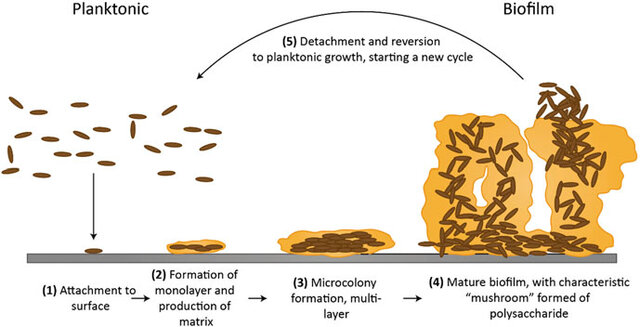
Figure 1.3: Different Stages of biofilm formation and development (Vasudevan, 2014).
Biofilm formation on the walls of the photobioreactor (biofouling) can be influenced by several factors, including the physicochemical properties of the surfaces, nutrient composition, hydrodynamics, and geometry of the PBR (Schnurr & Allen, 2015). In PBRs, biofouling decreases light irradiation. In the case of mixed cultures including microalgae and bacteria, nutrient levels and light intensity significantly influence the abundance of algal species in the biofilm, compared to their impact on heterotrophic bacteria, EPS, and inert solids (Guariento et al., 2011). When the biofilm develops too thick or the light intensity is too low, light limitation occurs; as a result, the biofilm may become dominated by bacteria and EPS (Guariento et al., 2011).
Since light irradiation is one of the most important parameters for effective microalgae production, eliminating biofilm is therefore critical to ensure high biomass productivity and consequently adequate performance of PBRs. When biofilm growth becomes excessive, the system must be stopped for cleaning, leading to substantial maintenance costs. In the particular case of thin-gap bubble columns (flat panel photobioreactor), an increase in biofilm development at the surfaces has been observed with enhanced culture density (Thobie et al., 2022). Numerous studies have therefore focused on eliminating biofilm or at least minimizing biofilm formation on the equipment walls. To prevent microalgal biofilm on the transparent walls of the PBRs, one can act on hydrodynamics. Shear stress can disrupt microalgae biofilm; a critical wall shear stress value can prevent biofouling, ensuring an efficient cultivation process (Belohlav et al., 2020). On the other hand, in the case of an already-formed biofilm, a critical shear stress value can be used to set the hydrodynamic conditions for an effective cleaning regime during cultivation (Belohlav et al., 2020).
2. New-Generation Photobioreactor Designs
The conventional geometries described above (tubular, airlift, flat-panel, stirred tank) remain the industrial workhorses of microalgal biotechnology, but a newer generation of reactor concepts has emerged over the past decade, aimed at raising areal productivity, cutting capital and operating costs, and integrating cultivation directly with resource recovery. Four such approaches illustrate this shift: thin-layer cascade reactors, biofilm-based attached-growth systems, flexible-film single-use reactors, and membrane-integrated photobioreactors.
2.1 Thin-Layer Cascade Photobioreactors
Thin-layer cascade (TLC) systems channel the microalgal suspension, top-illuminated, as a thin film of roughly 0.5-1 cm down a series of inclined, gently sloped platforms; gravity drives the flow, and a centrifugal pump returns the culture from a retention tank to the top of the cascade for recirculation (Grivalský et al., 2019). Because the layer is so thin, the surface-to-volume ratio is exceptionally high, which improves light penetration and gas exchange and largely prevents the oxygen accumulation and photoinhibition that limit deeper systems; TLC reactors consequently support some of the highest biomass densities reported for any cultivation configuration (Benner et al., 2022). In effect, the design combines the low construction cost of an open system with much of the process control of a closed photobioreactor.
2.2 Biofilm-Based (Attached-Growth) Photobioreactors
Biofouling, discussed above as an operational liability in suspension-based PBRs, is deliberately harnessed rather than avoided in attached-growth systems. Here, microalgae are cultivated as an immobilized biofilm on a rotating, sliding, or otherwise moving support instead of dispersed in the bulk liquid (Wang et al., 2017). Growing the culture as a biofilm markedly simplifies downstream processing: biomass can be harvested by scraping or pressing the attached layer, avoiding the energy-intensive centrifugation or flocculation normally required to concentrate a dilute suspension, and the resulting biomass has a much higher solids content from the outset (Wang et al., 2017). This dewatering advantage is a major reason attached-growth configurations, including rotating and revolving biofilm reactors, are being actively developed as a lower-cost alternative to conventional suspension PBRs.
2.3 Flexible-Film and Single-Use Photobioreactors
A separate line of development replaces the rigid glass or plastic vessel altogether with sealed, flexible-film enclosures, in some cases repurposing existing packaging materials. Merz et al. (2023) demonstrated that a commercially available air-cushion packaging film, a dual-layer, air-filled plastic pouch normally used to protect goods in transit, can serve directly as a disposable photobioreactor. Because each unit is sealed and used only once, this format inherently limits evaporative water loss, external contamination, and predation, three of the most persistent failure modes of open and semi-open cultivation systems; cultures of Nannochloropsis oculata grown in this format reached a biomass productivity of 298.55 mg/L per day (Merz et al., 2023). Single-use formats also remove much of the capital cost and cleaning-validation burden of rigid reactors, allowing scale-up simply by multiplying the number of low-cost units.
2.4 Membrane Photobioreactors
Membrane photobioreactors (MPBRs) couple microalgal cultivation directly with a membrane filtration unit, integrating biomass retention, water reuse, and effluent polishing within a single process step. This configuration is particularly suited to wastewater-based cultivation, since the membrane continuously separates treated water from the growing biomass while concentrating the culture, allowing simultaneous nutrient recovery and water remediation (Goh et al., 2022). Membrane fouling remains the principal constraint on this technology, and recent work has focused on forward-osmosis configurations and fouling-mitigation strategies to make MPBRs viable at larger scale (Goh et al., 2022).
3. Conclusion
Microalgal cultivation spans a continuum from simple open ponds to highly instrumented closed photobioreactors, and the choice of system is ultimately a trade-off between construction cost, contamination risk, and the degree of control needed over light, pH, temperature, gas transfer, and hydrodynamics. Biofouling remains a persistent constraint across nearly all closed geometries and must be managed through hydrodynamic design rather than eliminated outright. The newer generation of reactor concepts described here does not replace conventional tubular, airlift, flat-panel, or stirred-tank designs so much as reframe their limitations: thin-layer cascades push areal productivity by minimizing culture depth, attached-growth systems turn biofouling into a harvesting advantage, single-use flexible-film reactors strip out capital cost and contamination risk, and membrane photobioreactors fold cultivation directly into wastewater treatment. Translating these advances from laboratory and pilot scale to robust industrial operation remains the central engineering challenge for the field, and will likely determine which of these formats, if any, displaces the conventional geometries currently dominating commercial microalgae production.
References:
- Ahmed, S. F., Mofijur, M., Nahrin, M., Chowdhury, S. N., Nuzhat, S., Alherek, M., Rafa, N., Ong, H. C., Nghiem, L., & Mahlia, T. (2022). Biohydrogen production from wastewater-based microalgae: Progresses and challenges. International Journal of Hydrogen Energy, 47(88), 37321–37342. https://doi.org/10.1016/j.ijhydene.2021.09.178
- Belohlav, V., Zakova, T., Jirout, T., & Kratky, L. (2020). Effect of hydrodynamics on the formation and removal of microalgal biofilm in photobioreactors. Biosystems Engineering, 200, 315–327. https://doi.org/10.1016/j.biosystemseng.2020.10.014
- Blel, W., Legentilhomme, P., Legrand, J., Bénézech, T., & Gentil‐Lelièvre, C. L. (2008). Hygienic design: Effect of hydrodynamics on the cleanability of a food processing line. AIChE Journal, 54(10), 2553–2566. https://doi.org/10.1002/aic.11559
- Bhattacharjee, M. B. (2016). PHARMACEUTICALLY VALUABLE BIOACTIVE COMPOUNDS OF ALGAE. Asian Journal of Pharmaceutical and Clinical Research, 9(6), 43. https://doi.org/10.22159/ajpcr.2016.v9i6.14507
- Benner, P., Meier, L., Pfeffer, A., Krüger, K., Oropeza Vargas, J. E., & Weuster-Botz, D. (2022). Lab-scale photobioreactor systems: principles, applications, and scalability. Bioprocess and Biosystems Engineering, 45(5), 791–813. https://doi.org/10.1007/s00449-022-02711-1
- Grivalský, T., Ranglová, K., da Câmara Manoel, J. A., Lakatos, G. E., Lhotský, R., & Masojídek, J. (2019). Development of thin-layer cascades for microalgae cultivation: milestones (review). Folia Microbiologica, 64(5), 603–614. https://doi.org/10.1007/s12223-019-00739-7
- Benvenuti, G., Bosma, R., Ji, F., Lamers, P., Barbosa, M. J., & Wijffels, R. H. (2016). Batch and semi-continuous microalgal TAG production in lab-scale and outdoor photobioreactors. Journal of Applied Phycology, 28(6), 3167–3177. https://doi.org/10.1007/s10811-016-0897-1
- Chowdury, K. H., Nahar, N., & Deb, U. K. (2020). The growth factors involved in microalgae cultivation for biofuel production: a review. Computational Water Energy and Environmental Engineering, 09(04), 185–215. https://doi.org/10.4236/cweee.2020.94012
- Converti, A., Casazza, A. A., Ortiz, E. Y., Perego, P., & Del Borghi, M. (2009). Effect of temperature and nitrogen concentration on the growth and lipid content of Nannochloropsis oculata and Chlorella vulgaris for biodiesel production. Chemical Engineering and Processing, 48(6), 1146–1151. https://doi.org/10.1016/j.cep.2009.03.006
- Dasgupta, C. N., Gilbert, J. J., Lindblad, P., Heidorn, T., Borgvang, S. A., Skjanes, K., & Das, D. (2010). Recent trends in the development of photobiological processes and photobioreactors for the improvement of hydrogen production. International Journal of Hydrogen Energy, 35(19), 10218–10238. https://doi.org/10.1016/j.ijhydene.2010.06.029
- Dolganyuk, V., Belova, D., Babich, O., Prosekov, A., Ivanova, S., Katserov, D., Patyukov, N., & Sukhikh, S. (2020). Microalgae: a promising source of valuable bioproducts. Biomolecules, 10(8), 1153. https://doi.org/10.3390/biom10081153
- Fanesi, A., Paule, A., Bernard, O., Briandet, R., & Lopes, F. (2019). The architecture of monospecific microalgae biofilms. Microorganisms, 7(9), 352. https://doi.org/10.3390/microorganisms7090352
- Figueroa-Torres, G. M., Pittman, J. K., & Theodoropoulos, C. (2021). Optimisation of microalgal cultivation via nutrient-enhanced strategies: the biorefinery paradigm. Biotechnology for Biofuels, 14(1). https://doi.org/10.1186/s13068-021-01912-2
- Merz, C. R., Arora, N., Welch, M., Lo, E., & Philippidis, G. P. (2023). Microalgal cultivation characteristics using commercially available air-cushion packaging material as a photobioreactor. Scientific Reports, 13, 3792. https://doi.org/10.1038/s41598-023-30080-6
- Goh, P. S., Ahmad, N. A., Lim, J. W., Liang, Y. Y., Kang, H. S., Ismail, A. F., & Arthanareeswaran, G. (2022). Microalgae-enabled wastewater remediation and nutrient recovery through membrane photobioreactors: Recent achievements and future perspective. Membranes, 12(11), 1094. https://doi.org/10.3390/membranes12111094
- Guariento, R. D., Carneiro, L. S., Caliman, A., Bozelli, R. L., & Esteves, F. A. (2011). How light and nutrients affect the relationship between autotrophic and heterotrophic biomass in a tropical black water periphyton community. Aquatic Ecology, 45(4), 561–569. https://doi.org/10.1007/s10452-011-9377-5
- Han, X., Wong, Y. S., Wong, M. H., & Tam, N. F. Y. (2008). Feasibility of using microalgal biomass cultured in domestic wastewater for the removal of chromium pollutants. Water Environment Research, 80(7), 647–653. https://doi.org/10.1002/j.1554-7531.2008.tb00351.x
- Johnson, T. J., Katuwal, S., Anderson, G. A., Gu, L., Zhou, R., & Gibbons, W. R. (2018). Photobioreactor cultivation strategies for microalgae and cyanobacteria. Biotechnology Progress, 34(4), 811–827. https://doi.org/10.1002/btpr.2628
- Khaligh, S. F., & Asoodeh, A. (2022). Recent advances in the bio-application of microalgae-derived biochemical metabolites and development trends of photobioreactor-based culture systems. 3 Biotech, 12(10), 260. https://doi.org/10.1007/s13205-022-03327-8
- Legrand, J., Artu, A., & Pruvost, J. (2021). A review on photobioreactor design and modelling for microalgae production. Reaction Chemistry & Engineering, 6(7), 1134–1151. https://doi.org/10.1039/D0RE00450B
- Marsullo, M., Mian, A., Ensinas, A. V., Manente, G., Lazzaretto, A., & Maréchal, F. (2015). Dynamic modeling of the microalgae cultivation phase for energy production in open raceway ponds and flat panel photobioreactors. Frontiers in Energy Research, 3, 41. https://doi.org/10.3389/fenrg.2015.00041
- Not, F., Siano, R., Kooistra, W. H. C. F., Simon, N., Vaulot, D., & Probert, I. (2012). Diversity and ecology of eukaryotic marine phytoplankton. Advances in Botanical Research, 64, 1–53. https://doi.org/10.1016/B978-0-12-391499-6.00001-3
- Nuri, N. A. S. A., Puad, N. I. M., Azmi, A. S., Ahmad, F., & Rahman, S. N. F. S. A. (2023). Microalgae cultivation in flat panel photobioreactor as a method of carbon capture: A review. IOP Conference Series: Earth and Environmental Science, 1281(1), 012010. https://doi.org/10.1088/1755-1315/1281/1/012010
- Posten, C. (2009). Design principles of photo-bioreactors for cultivation of microalgae. Engineering in Life Sciences, 9(3), 165–177. https://doi.org/10.1002/elsc.200900003
- Pruvost, J., Cornet, J.-F., & Legrand, J. (2008). Hydrodynamics influence on light conversion in photobioreactors: An energetically consistent analysis. Chemical Engineering Science, 63(14), 3679–3694. https://doi.org/10.1016/j.ces.2008.04.026
- Schnurr, P. J., & Allen, D. G. (2015). Factors affecting algae biofilm growth and lipid production: A review. Renewable and Sustainable Energy Reviews, 52, 418–429. https://doi.org/10.1016/j.rser.2015.07.090
- Sompech, K., Chisti, Y., & Srinophakun, T. (2012). Design of raceway ponds for producing microalgae. Biofuels, 3(4), 387–397. https://doi.org/10.4155/bfs.12.39
- Takache, H., Christophe, G., Cornet, J. F., & Pruvost, J. (2010). Experimental and theoretical assessment of maximum productivities for the microalgae Chlamydomonas reinhardtii in two different geometries of photobioreactors. Biotechnology Progress, 26(2), 431–440. https://doi.org/10.1002/btpr.356
- Thobie, C., Blel, W., Hauser, J. L., Pruvost, J., & Gentric, C. (2022). Different types of bubbly flows in a confined channel with the aim of limiting microalgae biofilm development – Part I: Hydrodynamic study. Chemical Engineering and Processing – Process Intensification, 173, 108844. https://doi.org/10.1016/j.cep.2022.108844
- Vasudevan, R. (2014). Biofilms: Microbial cities of scientific significance. Journal of Microbiology & Experimentation, 1(3), 84–98. https://doi.org/10.15406/jmen.2014.01.00014
- Wang, J., Liu, W., & Liu, T. (2017). Biofilm based attached cultivation technology for microalgal biorefineries—A review. Bioresource Technology, 244, 1245–1253. https://doi.org/10.1016/j.biortech.2017.05.136
- Zhan, J., Rong, J., & Wang, Q. (2017). Mixotrophic cultivation, a preferable microalgae cultivation mode for biomass/bioenergy production, and bioremediation, advances and prospect. International Journal of Hydrogen Energy, 42(12), 8505–8517. https://doi.org/10.1016/j.ijhydene.2016.12.021
If you like this article, you can go through our other top articles
-
- Identification of Bacterial-Virus Binding by Fluorescent Labeling – https://learnlifescience.org/identification-of-bacterial-virus-binding-by-fluorescent-labeling/
- DNA Sequencing Methods – https://learnlifescience.org/dna-sequencing-methods/
- Biosensors as a Disease Diagnostic Tool: A Comprehensive Review – https://learnlifescience.org/biosensors-as-a-disease-diagnostic-tool-a-comprehensive-review/
- An Overview of Bacterial Genomic DNA Isolation – https://learnlifescience.org/an-overview-of-bacterial-genomic-dna-isolation/
“Since the article has been written to reflect the actual views and capabilities of the author(s), they are not revised for content and only lightly edited to be confirmed with the Learn life sciences style guidelines”